A roof leak during a summer storm. A water heater that let go while you were at work. An AC drain line that's been quietly overflowing into the closet for weeks. In the River Region's heat and humidity, water damage that isn't dried quickly has a way of turning into a mold problem.
If you're facing mold in a Montgomery-area home, rental or business, it helps to know what to expect. Here's the mold remediation process from first call to final walkthrough, what affects the cost, and what you can do right now — from the team at Bio-One of Montgomery.
The EPA says that if wet or damp materials are dried within 24–48 hours after a leak or spill, in most cases mold will not grow. After that window, growth becomes likely. If you've just had water damage, do these things first:
People use the terms interchangeably, but they aren't quite the same. Mold removal means physically taking the visible growth off surfaces. Mold remediation is the whole job: finding all the growth, containing it, removing it and the materials it has damaged, fixing the moisture that caused it, and confirming the area is back to normal.
It's also worth knowing that no one can make a home mold-free. The EPA notes that it's impossible to get rid of every mold spore indoors — some will always be in the air and dust. Those spores won't grow without moisture, which is why fixing the water problem is the part that makes remediation last.
Our phones are answered 24/7. We'll ask what happened, where you're seeing or smelling mold, and whether anyone in the home has health concerns, then explain what happens next.
We walk the property with you and use moisture meters, thermal imaging and air sampling to find growth you can't see — behind drywall, under flooring, in the attic or crawl space.
You get a remediation proposal with the scope of work, estimated pricing and timeline before anything starts.
We seal off the affected area so spores don't spread into clean parts of the home while we work.
Materials that can't be saved — often drywall, insulation, carpet or ceiling tile — are removed and disposed of. The EPA notes that porous materials may be impossible to clean completely once mold grows into them. Hard surfaces are cleaned, because dead mold can still cause allergic reactions and has to be physically removed.
The area is treated and dried, and lingering musty smells are handled through our odor removal process.
We identify the moisture source so it can be corrected — otherwise the mold returns. By the EPA's standard, a cleanup is complete when the moisture problem is fixed, there's no visible mold or moldy odor, and the area shows no regrowth afterward.
We don't ask for insurance information upfront. If you need to file, we'll help open the claim and communicate with your adjuster.
Every job is priced after an assessment, because the same visible spot can be a two-hour fix or a multi-day project depending on what's behind it. The main factors are:
Acting quickly is the single biggest way to keep cost down. Mold damages what it grows on, and the EPA notes that the longer it grows, the more damage it can cause.
If you rent, the EPA advises reporting plumbing leaks and moisture problems to your landlord or property manager immediately. If you manage property, a fast, documented response keeps a small leak from becoming a unit-wide problem. Bio-One of Montgomery works with property managers and apartment communities across the River Region.
Bio-One of Montgomery provides mold remediation throughout Montgomery County (Montgomery, Pike Road), Autauga County (Prattville), Elmore County (Millbrook, Wetumpka), Dallas County (Selma), Lee County (Auburn, Opelika), Russell County (Phenix City), Pike County (Troy) and Muscogee County, GA.
It depends on the size of the affected area, the materials involved and whether repairs are needed to fix the moisture source. Small, contained jobs may be finished quickly; larger ones can take several days. Your written proposal includes an estimated timeline.
Coverage depends on your policy and the cause of the water damage. Document the damage with photos, report it promptly, and we can help open the claim and work with your adjuster.
Stop the water source if you can, start drying the area, avoid disturbing visible mold, don't run the HVAC system if you think it's contaminated, and take photos for insurance.
Not if the moisture problem is fixed. Mold spores exist everywhere, but they can't grow without moisture. That's why we focus on the source, not just the visible growth. The EPA also recommends keeping indoor humidity below 60%, ideally 30–50%.
If you can see the mold, testing is usually unnecessary, according to the EPA. Sampling is most useful for locating hidden mold or confirming that an area has been properly cleaned.
Yes. Bio-One of Montgomery serves Prattville, Millbrook, Wetumpka, Auburn, Opelika, Selma, Troy, Phenix City and the surrounding River Region, 24/7.
Whether you're in the first hours after a leak or dealing with mold that's been growing for a while, we'll help you understand your options and get it handled.
Phone: 334-523-9191
Email: info@bioonemontgomery.com
Address: 3066 Zelda Road #418, Montgomery, AL 36106
Online: Request service
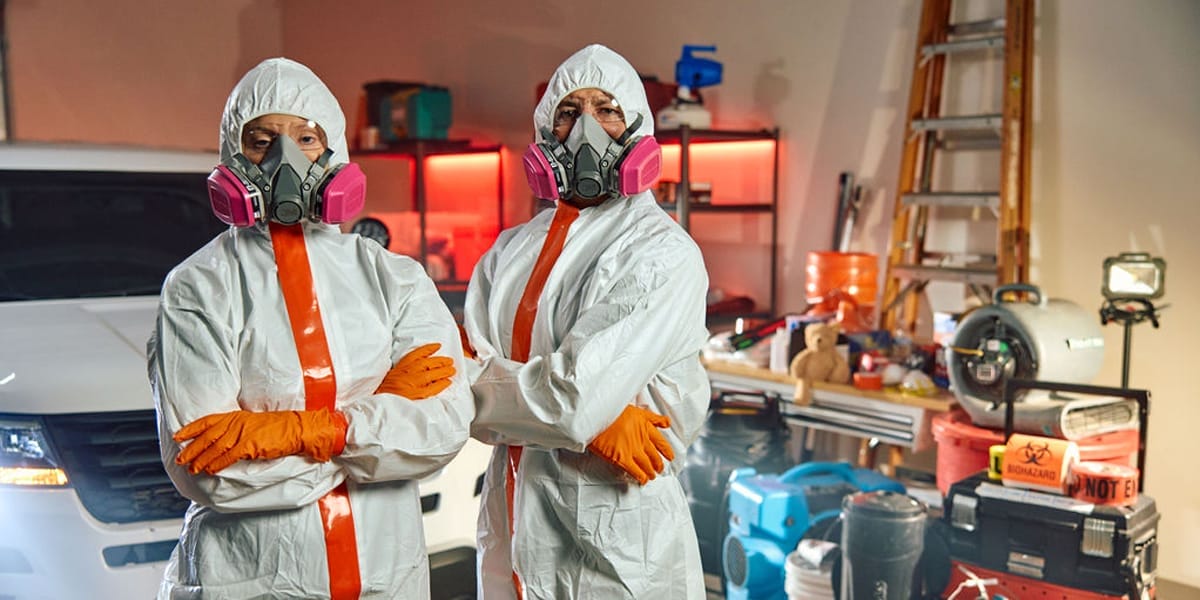
If your home or building went up before the early 1980s, the walls and ceilings around you may not be what you think they are. Asbestos drywall removal is one of the most common — and most misunderstood — abatement jobs in central Alabama, and it catches homeowners off guard for a simple reason: the asbestos usually isn't in the drywall panel itself. It's in the mud.
Bio-One handles asbestos sheetrock removal, popcorn ceiling removal, and full-scale drywall demolition for property owners across Birmingham, Montgomery, Tuscaloosa, Auburn, Opelika, Prattville, Hoover, Bessemer, Northport, and the surrounding communities. Here's what the work actually involves.
Three drywall-system materials are the usual suspects:
Joint compound (drywall mud). Chrysotile asbestos was standard in most industrial and consumer drywall accessory products through the 1970s. The Consumer Product Safety Commission banned consumer patching compounds containing respirable free-form asbestos in December 1977, but existing inventory was never recalled — contractors kept using what was already on the shelf into the early 1980s. Any drywall finishing work done before roughly 1982 should be treated as suspect until a lab says otherwise.
Popcorn (acoustic) ceiling texture. The EPA banned spray-applied asbestos surfacing materials in 1973, yet popcorn texture kept going up in homes well past that date using stockpiled and non-spray products. Pre-1986 texture is the standard cutoff for "test it first."
Textured wall finishes and skim coats. Same compound, same risk, applied over a broader surface.
Intact drywall sitting quietly on your wall is generally low risk. The danger is created by the work itself. Sanding joint compound is one of the dustiest activities in all of remodeling — and if that compound contains asbestos, every pass of the sanding pole is putting microscopic fibers into the air you breathe. Scraping a popcorn ceiling is worse, because you're working overhead and the debris rains down through your breathing zone.
You cannot tell by looking. Asbestos-containing compound is visually identical to modern compound. The only answer is laboratory analysis of a representative sample that captures both the seam and the texture.
The most common request we get in Birmingham and Montgomery. Homeowners updating a 1960s or '70s house want the texture gone before they list or renovate. We test first, then either abate under full containment or hand it off as ordinary texture scraping if the lab comes back clean.
Trickier than a ceiling, because the compound runs along every seam and corner bead in the room. Depending on the scope, the right answer may be seam-by-seam removal or taking down the entire wall assembly — the second option is frequently cheaper and always cleaner.
Gut renovations, fire and water losses, hoarding cleanouts, commercial build-outs, and pre-demolition work. When an entire structure's wall and ceiling system is coming out, the whole thing gets treated as regulated material and handled under containment.
Proper abatement is not a demo crew with dust masks. Our process:
Here is a detail worth understanding before you pick up a scraper: privately owned residential buildings of four units or fewer that remain residential property are exempt from Alabama's asbestos abatement regulations — though disposal regulations still apply.
Read that again. It is legal, in many cases, for an Alabama homeowner to tear out their own asbestos popcorn ceiling. ADEM's own paperwork flags the obvious problem with that exemption: it puts homeowners at risk. The regulation stops applying at your front door. The disease process does not. Mesothelioma and asbestosis have latency periods measured in decades, and a single weekend of dry-scraping a ceiling is exactly the kind of exposure that shows up thirty years later.
Commercial buildings, apartment complexes over four units, schools, and any structure headed for demolition don't get the exemption. That work must be performed by a contractor certified by the Alabama Department of Environmental Management.
The honest answer is that pricing depends on square footage, ceiling height, whether the texture has been painted, access, and how much of the structure is involved. But national 2026 figures give you a reasonable starting frame:
For comparison, scraping non-asbestos popcorn texture runs about $1 to $3 per square foot. That gap is the entire reason a $60 lab test is worth doing before anyone touches the ceiling: testing tells you which job you actually have. Bids that come in well under the abatement range on regulated material usually mean a corner is being cut on containment, disposal, or notification — and you inherit that liability along with the invoice.
Local pricing in Alabama generally runs below coastal-metro numbers. Get a written, itemized estimate for your specific property.
Does drywall itself contain asbestos? Usually not. The joint compound, texture, and skim coat are where asbestos is typically found. Some older wallboard did contain it, which is why samples should capture the full assembly.
Can I just paint or drywall over an asbestos popcorn ceiling? Encapsulation — covering intact material rather than removing it — is a legitimate option in some cases, and often the less expensive one. It depends on the texture's condition and your renovation plans. We'll tell you honestly when it's the better call.
How long does asbestos drywall removal take? A single room is often a one- to two-day job including setup and clearance. Whole-house or commercial projects run longer.
Do you handle the disposal paperwork? Yes. Manifests, notifications, and disposal documentation are part of the job.
Bio-One serves Birmingham, Montgomery, Tuscaloosa, Auburn, Opelika, Prattville, Wetumpka, Millbrook, Hoover, Vestavia Hills, Bessemer, Northport, Alexander City, Selma, and the surrounding communities.
We're best known for the calls nobody wants to make — biohazard cleanup, trauma scenes, hoarding, and unattended deaths. That work built the discipline this work requires: containment, documentation, and respect for a property that is somebody's home.
If you're planning a renovation, buying an older property, or staring at a popcorn ceiling and wondering what's in it, call before you scrape.
334-523-9191 | info@bioonemontgomery.com | www.bioonemontgomery.com

Here at Bio-One, we are known for our specialty services such as biohazard clean up, hoarding cleanup and mold remediation. We also specialize in Asbestos Abatement, and removing asbestos-containing flooring throughout Alabama is something we can help any home owner with.
We often get called by home owners or their Realtors when going through a real estate transaction, or the home owner's contractor when starting a renovation project. When a home owner is wanting to make a change like replace flooring, knock out a wall, or upgrade their HVAC system, often there is some existing asbestos-containing material that must be removed - and that is where Bio-One comes in.
Flooring is one of the most common types of asbestos-containing material, and can come in many forms:
Removing asbestos flooring or other materials from your home yourself is not a good idea. There are many regulations, and specific protocols involved with the removal of asbestos, and you must adhere to EPA and ADEM rules. Bio-One takes care of the entire process, leaving all of the guesswork out of it for our customers. Bio-One handles:
Definitely give Bio-One a call prior to removing any questionable flooring in your home. Bio-One has three convenient locations:
Bio-One Huntsville - 256-677-6111
Bio-One Montgomery - 334-523-9191
Bio-One Alabama - 205-937-1708

Mold is one of those topics which can be scary, but is often misunderstood - and here in humid Alabama, mold is very common!
Luckily, Bio-One has your back, and we are here to answer all of your mold-related questions.
Mold can show up in your home for a number of reasons, and mold can present itself in many different ways. If you suspect you have mold in your home, call us, and we will immediately:
After that, we assist you in making sure the reason for your mold is first taken care of, and then we come out to do the mold removal and mold remediation.
Sometimes mold removal requires the removal of things like drywall - and sometimes it doesn't - it really depends on the extent of the problem, and the necessary scope of work.
Bio-One is a local, family-owned company right here in Montgomery, Alabama, with two other family-owned locations in Birmingham and Huntsville - we are here to help all homeowners in Alabama with honest and affordable mold removal, and we specialize in Mold Removal in Opelika, AL.
Give us a call today! (334) 523-9191

Bio-One of Montgomery provides professional hantavirus disinfection and rodent droppings cleanup in Montgomery, Prattville, Millbrook, Pike Road, Auburn, Opelika, and surrounding Central Alabama communities. Call 334-523-9191.
You noticed the signs — chewed wires, scratching sounds in the attic at night, maybe droppings in the pantry. You did the right thing and called a pest control company. They came out, sealed entry points, set traps, and cleared the rodents. Problem solved, right? Not quite. What most pest control companies don't do — and what most homeowners don't realize — is that the rodents left something behind far more dangerous than the inconvenience of their presence: contaminated droppings, urine, and nesting material that can pose a serious health risk to you and your family. And right now, hantavirus is one of the biggest concerns on people's minds — and for good reason.
Hantavirus Pulmonary Syndrome (HPS) is a severe, potentially fatal respiratory illness caused by hantaviruses — most commonly transmitted through contact with infected rodent droppings, urine, or saliva. In the United States, the deer mouse is the primary carrier, but other rodents can also harbor the virus. People contract hantavirus most frequently by inhaling tiny airborne particles contaminated by infected rodent waste. This means that simply sweeping up droppings in your attic, crawlspace, or basement without proper precautions could put you at serious risk. According to the CDC, hantavirus has a mortality rate of approximately 38% — which is why awareness and proper cleanup procedures matter so much. Hantavirus does not spread person to person. You get it from the rodents — specifically from their waste. And that's exactly why professional hantavirus disinfection and rodent droppings cleanup is not a DIY job.
Rodent contamination is rarely limited to one spot. In our experience serving Montgomery and the surrounding areas, we commonly find rodent droppings, urine, and nesting material in:
• Attics — the #1 most common location in Alabama homes
• Crawl spaces under the home
• Inside wall voids
• Garages and storage areas
• HVAC ducts and air handling units
• Basements
• Kitchen cabinets and pantry areas
Every one of these locations carries the same risk: disturbing the droppings without proper PPE and disinfection protocols can aerosolize the hantavirus particles and other pathogens, putting anyone nearby at risk.
Bio-One's rodent droppings cleanup and hantavirus decontamination process is thorough, methodical, and done right the first time. Here's what we do: 1. Assessment — We inspect the full scope of contamination before touching anything. This includes attic insulation, crawlspace vapor barriers, HVAC components, and any other affected areas. 2. Personal Protective Equipment (PPE) — Our technicians suit up with full respirators, Tyvek suits, gloves, and boot covers. You should never attempt this without full PPE — an N95 mask is not sufficient. 3. Wet Treatment of Droppings — Before any removal, all droppings and contaminated material are thoroughly saturated with a hospital-grade EPA-registered disinfectant. This critical step kills pathogens and prevents aerosolization. This is the step most DIYers skip — and the most dangerous one to skip. 4. Careful Removal — Contaminated material is carefully removed, bagged, and disposed of in accordance with biohazard waste protocols. 5. Full Surface Disinfection — All affected surfaces are treated with disinfectant, including wood framing, subflooring, joists, and any structural components that were exposed to rodent waste. 6. Deodorization — We address odor at the source, not just with masking agents. As a side note: in many attic cleanups, insulation that has been heavily contaminated or compromised by rodents needs to be removed and replaced. We can facilitate this as part of the overall remediation process.
We understand the impulse. You found some droppings in the attic, you grab a broom and a trash bag, and you start cleaning. But here's the problem — the moment you sweep those droppings without proper wet treatment first, you are potentially aerosolizing hantavirus particles. You are breathing them in. And hantavirus doesn't care how healthy you are. Beyond hantavirus, rodent droppings can also carry: • Leptospirosis • Salmonella • Lymphocytic choriomeningitis (LCM) • E. coli • Histoplasmosis (from bat and bird droppings) The bottom line: rodent droppings cleanup requires professional training, the right disinfectants, proper PPE, and experience. It is a biohazard job — not a janitorial one.
Bio-One of Montgomery proudly serves Montgomery and the surrounding communities including Prattville, Millbrook, Pike Road, Wetumpka, Tallassee, Auburn, Opelika, Alexander City, Selma, Troy, Greenville, Clanton, and throughout Montgomery, Autauga, Elmore, Chilton, Lee, and Pike Counties. We respond 24 hours a day, 7 days a week — because a biohazard doesn't wait for business hours.
334-523-9191
Bio-One of Montgomery is Alabama's trusted biohazard remediation company. We are IICRC certified, OSHA compliant, and have helped hundreds of Alabama homeowners and property managers safely remediate rodent contamination. We work with insurance and offer discreet, compassionate service. Don't risk your health or your family's health on a DIY cleanup. Call the professionals.